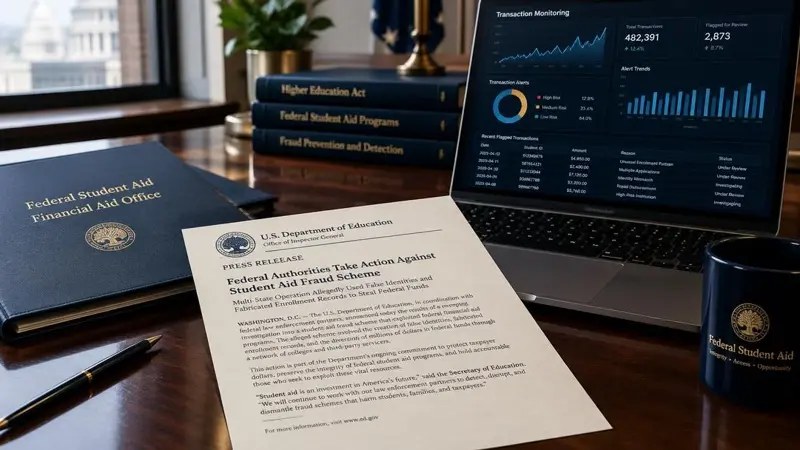
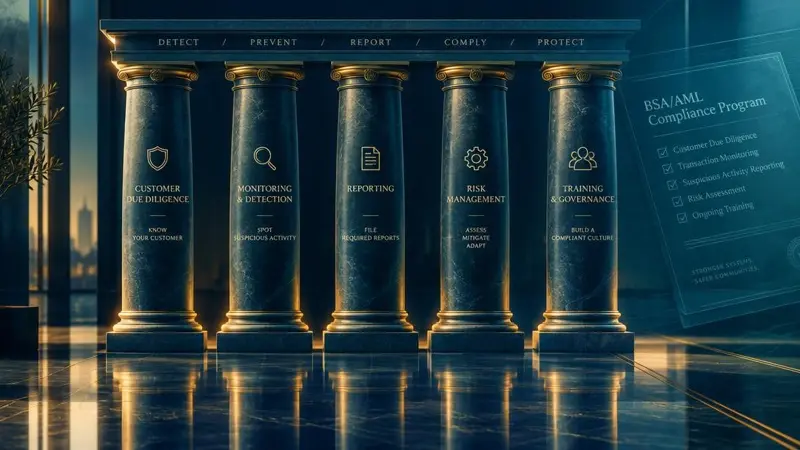
On October 21, 2026, Treasury expanded Operation Economic Outcast, designating a law firm, shipping agents, and vessels tied to Iranian petroleum shipments, while FinCEN issued its first administrative subpoena under 31 U.S.C. 5318(k) in an investigation involving a Greek bank. Here is what the action means for sanctions screening, third-party risk, and training.
Treasury expanded Operation Economic Outcast on October 21, 2026, designating law firm Karnakis and Karnakis, two shipping agents, and multiple vessels as blocked property under Executive Order 13902
The U.S. Department of the Treasury has expanded its campaign against Iranian sanctions evasion, targeting an international network of legal service providers, shipping agents, and commercial vessels allegedly involved in facilitating the transportation of sanctioned Iranian commodities.
The action targets the service layer of sanctions evasion: corporate formation, vessel ownership, shipping agents, bunkering, and intermediaries, not only shippers and traders
On October 21, 2026, Treasury announced additional sanctions under Operation Economic Outcast, including designations involving a Panama and Greece based law firm, Singaporean and United Arab Emirates shipping businesses, and associated maritime assets. The announcement also revealed a significant development in financial enforcement: the Financial Crimes Enforcement Network (FinCEN) has issued what Treasury describes as its first administrative subpoena under 31 U.S.C. 5318(k) of the Bank Secrecy Act (BSA) as part of an investigation into a Greek bank's potential relationships with Iran and its proxies.
FinCEN issued its first administrative subpoena under 31 U.S.C. 5318(k) in an investigation involving a Greek bank, a records authority reaching foreign banks with U.S. correspondent relationships
For financial institutions, compliance officers, international businesses, and professional service providers, these developments reinforce an important regulatory reality: sanctions exposure extends beyond the parties directly transporting or purchasing restricted commodities. It can also arise through the financial, legal, and corporate structures supporting those transactions.
An investigation, subpoena, or information request does not establish wrongdoing, and Treasury did not identify the Greek bank as a newly sanctioned institution
Key Takeaways
- Treasury expanded Operation Economic Outcast on October 21, 2026, designating a Panama and Greece based law firm, two shipping agents, and multiple vessels as blocked property.
- The designations were made under Executive Order 13902, and OFAC issued Iran-related General Licenses GG and HH covering wind-down and certain authorized transactions.
- FinCEN used 31 U.S.C. 5318(k) for the first time to obtain records involving a foreign bank with U.S. correspondent relationships, in an investigation involving a Greek bank.
- An investigation, subpoena, or information request does not establish wrongdoing, and Treasury did not identify the bank as newly sanctioned.
- Professional service providers, not just shippers and traders, can carry sanctions exposure when they form or administer entities that obscure beneficial ownership.
- Effective screening looks past exact-name matches to ownership, counterparties, vessels, and payment routing, including OFAC's 50 Percent Rule.
- Training is the control that turns these typologies into recognition at the front line, in onboarding, payments, trade finance, and relationship management.
OFAC issued Iran-related General Licenses GG and HH for wind-down and certain authorized transactions, and each license must be reviewed for scope and deadlines
What Is Operation Economic Outcast?
Launched on August 24, 2026, Operation Economic Outcast is a U.S. Treasury initiative designed to disrupt financial and commercial networks that enable Iran to generate revenue, move funds internationally, and evade economic sanctions. The operation involves cooperation among U.S. government agencies and international partners, including authorities in Europe, the United Kingdom, and the Gulf region.
Screening should reach ownership, counterparties, vessels, and payment routing, including OFAC's 50 Percent Rule, rather than relying on exact-name matches
Rather than focusing exclusively on sanctioned Iranian financial institutions or oil producers, Treasury is examining the broader infrastructure supporting international trade and financial activity. That scope is the part compliance teams should pay closest attention to, because it moves the enforcement lens away from a narrow list of prohibited counterparties and onto the service layer that makes restricted trade possible. This includes:
Training tailored to onboarding, payments, trade finance, and relationship management is what turns these typologies into recognition at the desk
- Corporate formation and legal services used to establish shipping entities.
- Maritime transportation networks and vessel ownership arrangements.
- Shipping agents, logistics providers, and port service companies.
- International financial institutions and correspondent banking relationships.
- Shell companies and intermediaries used to obscure beneficial ownership.
- Cross-border payment structures potentially facilitating restricted transactions.
The October 21 action illustrates how these interconnected services can create sanctions exposure across multiple industries and jurisdictions. A vessel is not the only thing that can be blocked, and an oil trader is not the only party that can be named.
Treasury Sanctions Law Firm Linked to Iranian Shipping Networks
One of the most significant elements of the latest announcement is the designation of Karnakis and Karnakis, a law firm operating in Panama and Greece. According to Treasury, the firm helped establish and administer companies that owned vessels involved in transporting substantial quantities of Iranian petroleum, petrochemicals, steel, and other commodities.
Treasury alleges that these corporate structures helped conceal the relationships between shipping vessels, their beneficial owners, and sanctioned commercial activity. The firm reportedly participated in establishing companies including Skyros Maritime and Trading S.A., Corfu Maritime and Trading S.A., and Elias Shipping and Trading Group S.A., which had previously been designated by the Office of Foreign Assets Control (OFAC). Treasury also identified several individuals associated with the law firm for designation.
Why This Matters for Compliance Professionals
This action is particularly relevant to organizations providing legal, accounting, corporate formation, fiduciary, and other professional services. A business may encounter sanctions risks even when it does not directly purchase, sell, or transport restricted commodities. For example, exposure can arise when a service provider participates in establishing or maintaining corporate structures that facilitate prohibited transactions.
The compliance implications extend to four areas that should already exist in a well-designed program, but that this action forces institutions to test rather than assume:
- Beneficial ownership identification: understanding who ultimately owns or controls a legal entity, especially when multiple jurisdictions and intermediaries are involved.
- Customer due diligence: assessing the intended business activities, expected transaction patterns, and commercial purpose of newly established entities.
- Enhanced due diligence: applying additional scrutiny when customers operate in higher-risk industries or have complex ownership arrangements.
- Ongoing monitoring: identifying material changes in ownership, management, business activity, counterparties, or geographic exposure.
The central lesson is that a legitimate corporate structure does not automatically establish that its underlying activities are legitimate. A properly formed company, registered in a reputable jurisdiction and administered by a licensed professional, can still be the instrument of a sanctions violation.
Shipping Agents and Maritime Assets Face New OFAC Sanctions
Treasury also announced sanctions involving two shipping agents accused of supporting Iranian shadow fleet activity.
Amigoz Singapore PTE. Ltd. Treasury identified Amigoz as a Singapore based shipping agency that provided services associated with Iranian petroleum shipments. According to the announcement, the company supported activities involving vessels and commercial networks connected to Iranian oil transportation, including providing bunkering services to a shadow fleet vessel.
Whales Shipping Line LLC. The Dubai based maritime company was identified for its role in supporting sanctioned commercial relationships and providing assistance to Amigoz. Treasury also identified the vessels WHALES DIAMOND and WHALES PEARL as blocked property associated with Whales Shipping Line LLC.
Separately, Treasury designated Roxette Maritime Shipping and Trading S.A. and identified seven cargo vessels in which the company had an interest as blocked property. These designations, made pursuant to Executive Order 13902, demonstrate how sanctions may affect not only individual companies but also the vessels, assets, and commercial relationships supporting their operations.
Understanding Shadow Fleet Activity
The term shadow fleet generally refers to vessels and maritime networks used to transport commodities while attempting to evade sanctions, conceal ownership, or obscure the true origin and destination of cargo. Potential indicators of maritime sanctions evasion can include:
- Unexplained changes in vessel ownership, registration, or flag.
- Frequent vessel renaming or changes involving corporate operators.
- Suspicious interruptions or manipulation of Automatic Identification System (AIS) transmissions.
- Ship-to-ship cargo transfers inconsistent with documented trade activity.
- Inaccurate or contradictory shipping documentation.
- Complex ownership structures involving multiple offshore entities.
- Payment arrangements involving unrelated third parties or opaque intermediaries.
These indicators are not independently conclusive evidence of wrongdoing. Legitimate maritime operations can involve similar characteristics. However, when several indicators appear together, especially in transactions involving higher-risk jurisdictions or restricted commodities, additional investigation may be warranted.
FinCEN Uses Bank Secrecy Act Authority to Investigate Potential Iranian Financial Connections
Beyond the sanctions designations, Treasury disclosed an important development involving FinCEN and international banking oversight. According to the October 21 announcement, FinCEN is coordinating with European authorities, including counterparts in Greece, to investigate potential financial connections involving Iran and its proxies.
Treasury reported that FinCEN issued its first administrative subpoena pursuant to 31 U.S.C. 5318(k) in connection with an investigation involving a Greek bank. This authority provides mechanisms for obtaining certain records involving foreign banks with U.S. correspondent banking relationships, subject to applicable statutory requirements. FinCEN also issued multiple requests for information concerning banks' relationships with Iranian financial institutions designated by OFAC.
Importantly, an investigation or information request does not establish that the institution under review has violated the law. Treasury's announcement did not identify the Greek bank as a newly sanctioned institution. Compliance professionals should be precise about that distinction when discussing the action internally, because conflating an inquiry with a finding misstates both the legal position and the reputational one.
Why This Development Is Significant
International financial investigations increasingly examine relationships among financial institutions, offshore companies, intermediaries, and payment networks. For banks and other covered financial institutions, this underscores the importance of maintaining reliable documentation concerning:
- Correspondent banking relationships.
- Foreign financial institution exposure.
- Customer and counterparty risk assessments.
- Source of funds and transaction purpose.
- Beneficial ownership and control.
- Sanctions screening results and investigation records.
- Suspicious activity escalation and reporting decisions.
Compliance programs should be capable of identifying concerning activity and explaining how material risks were assessed, investigated, and resolved. The documentation is the program. If the reasoning behind a decision cannot be reconstructed later, the control effectively did not exist.
Five Compliance Priorities Following Treasury's Announcement
Organizations with exposure to international finance, maritime commerce, commodity trading, and professional services should consider reviewing the following areas. These are recommended practices built on existing obligations, not new requirements created by the announcement.
1. Strengthen OFAC Screening Beyond Direct Customer Names
Effective sanctions screening should evaluate relevant parties throughout the business relationship. Depending on the transaction and risk profile, this may include customers, beneficial owners, intermediaries, counterparties, vessels, shipping companies, and other involved parties.
Organizations should also consider OFAC's 50 Percent Rule, under which entities owned 50 percent or more, directly or indirectly and in the aggregate, by one or more blocked persons are generally treated as blocked, even if they are not separately listed. Screening processes should incorporate relevant identifiers and ownership information rather than relying exclusively on exact-name matching. A vendor that only matches names against a list will not surface a newly formed company owned by a designated individual.
2. Reassess Higher-Risk Third-Party Relationships
Professional service providers, shipping agents, commodity brokers, and intermediary businesses may introduce risks that are not immediately apparent from a customer's stated business purpose. A risk-based review should consider the economic purpose of the relationship, ownership transparency, relevant sanctions exposure, and any unusual transaction patterns.
3. Improve Transaction Monitoring for Trade-Based Financial Crime
Trade-based money laundering and sanctions evasion can involve legitimate commercial channels, including commodity shipments, international payments, and trade documentation. Compliance teams should consider whether existing monitoring controls are appropriate for transactions involving higher-risk commodities, unusual payment structures, inconsistent documentation, or intermediaries whose commercial role is unclear.
4. Establish Clear Investigation and Escalation Procedures
Identifying a potential sanctions or suspicious activity concern is only part of an effective compliance program. Organizations should maintain procedures for reviewing alerts, documenting findings, escalating significant concerns, and determining whether blocking, rejection, regulatory reporting, or other action is legally required. Covered financial institutions must also evaluate suspicious activity reporting obligations under the rules applicable to their institution type.
5. Review Internal Sanctions and AML Training
Employees in customer onboarding, payment operations, correspondent banking, trade finance, and relationship management functions should understand how sanctions evasion can occur through seemingly routine commercial transactions. Training should be tailored to actual job responsibilities and supported by practical examples relevant to the organization's risk exposure. A generic annual module that covers the definition of a blocked person but not the corporate formation and shipping patterns described in this action will not produce recognition at the desk.
Understanding the Potential Consequences of OFAC Designations
OFAC designations can have significant legal and operational consequences. Generally, property and interests in property of blocked persons that are within U.S. jurisdiction or in the possession or control of U.S. persons must be blocked and reported as required. Transactions involving blocked persons or blocked property may also be prohibited unless an applicable exemption or OFAC authorization permits the activity.
Organizations should not assume that every related transaction is prohibited without considering the applicable legal framework. On October 21, OFAC also announced Iran-related General Licenses GG and HH, addressing specified wind-down activities and certain other authorized transactions involving newly designated parties or blocked vessels. The applicability, conditions, and deadlines of any license must be reviewed carefully before relying on it. Non-U.S. persons may also face sanctions exposure under applicable authorities, depending on their activities and relationships.
The Broader Compliance Implications: From Customer Screening to Network Risk
A notable feature of Operation Economic Outcast is Treasury's focus on the supporting infrastructure of sanctions evasion. For years, many organizations have approached sanctions compliance primarily through customer name screening. While screening remains essential, sophisticated evasion networks can involve multiple layers of companies, professional intermediaries, foreign financial institutions, and assets registered in different jurisdictions. This makes understanding relationships between entities increasingly important.
A company may pass an initial sanctions screen while still presenting substantial risk through its ownership, counterparties, commercial activities, or associated assets.
For AML and sanctions professionals, this supports a more comprehensive approach that combines customer due diligence, beneficial ownership analysis, transaction monitoring, sanctions screening, and investigative escalation. It also highlights the importance of aligning written compliance policies with operational procedures and staff training. For more on how these controls fit together, see our analysis of the intersection of OFAC sanctions compliance and AML and our guide to customer due diligence.
How Soflo Consulting Supports AML and Sanctions Compliance
At Soflo Consulting, we help organizations develop, review, and strengthen compliance frameworks designed to address evolving financial crime and regulatory risks. Our services include:
- AML/BSA Program Development: establishing risk-based policies, procedures, and internal controls. See how to build an AML program.
- Compliance Program Reviews: evaluating existing AML and sanctions controls and identifying opportunities for improvement, starting with a BSA/AML risk assessment.
- OFAC and Sanctions Compliance: supporting risk assessments, screening procedures, escalation workflows, and related program documentation.
- Customer Due Diligence and Enhanced Due Diligence: strengthening customer risk assessments and documentation practices.
- Compliance Training: helping personnel understand relevant obligations, emerging typologies, and practical compliance responsibilities through role-based AML and OFAC training.
Our approach emphasizes effective implementation, documented controls, and practical recommendations aligned with each organization's activities, risk profile, and applicable regulatory obligations.
Final Perspective
The October 21, 2026 Treasury action demonstrates that sanctions enforcement increasingly reaches the legal, corporate, maritime, and financial networks that may facilitate prohibited international commerce. The combination of OFAC designations, maritime asset restrictions, international regulatory cooperation, and FinCEN investigative measures reinforces the importance of comprehensive, risk-based compliance programs.
For regulated organizations and businesses exposed to international transactions, the critical question is not simply whether a customer appears on a sanctions list, but whether the organization sufficiently understands the parties, assets, and activities involved in the relationship. Proactive risk assessments, effective monitoring, appropriate due diligence, and well-documented compliance decisions remain central to managing these risks.
Strengthen Your Compliance Framework
Regulatory developments can reveal weaknesses in existing AML and sanctions compliance procedures. Soflo Consulting works with organizations seeking to evaluate compliance risks, improve internal controls, and establish practical, risk-based compliance programs. To discuss your exposure, contact Soflo Consulting.
Disclaimer: This article is provided for general informational and educational purposes and does not constitute legal advice. Regulatory obligations depend on an organization's activities, jurisdiction, and applicable laws. Organizations should consult qualified legal or compliance professionals regarding specific circumstances. References to investigations, allegations, and designations reflect information reported by U.S. government authorities as of October 21, 2026.
Frequently Asked Questions
Treasury announced additional sanctions under Operation Economic Outcast, designating a Panama and Greece based law firm, Karnakis and Karnakis, along with Singaporean and United Arab Emirates shipping businesses, individuals associated with the firm, and multiple vessels identified as blocked property. The designations were made pursuant to Executive Order 13902. Treasury also disclosed that FinCEN issued its first administrative subpoena under 31 U.S.C. 5318(k) as part of an investigation involving a Greek bank, and OFAC issued Iran-related General Licenses GG and HH.
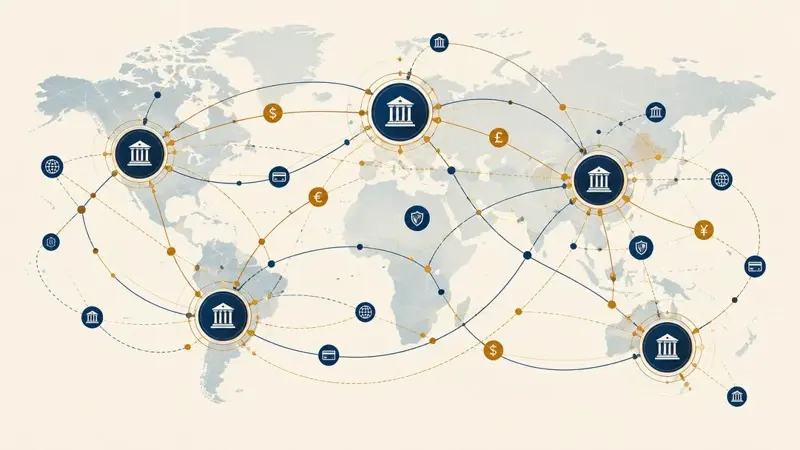
Operation Economic Outcast: What FinCEN's Global Financial Institution Exchange Means for AML and Sanctions Compliance
The September 2026 FinCEN Exchange on Iranian illicit finance, and why sanctions compliance cannot be reduced to list matching.
OFAC Sanctions Compliance and AML: Understanding the Intersection
How sanctions screening overlaps with, and remains distinct from, BSA/AML monitoring and reporting obligations.

What Is Customer Due Diligence (CDD)? The Plain-English Guide
The framework behind ownership identification, expected activity, and ongoing monitoring of higher-risk relationships.
What Is a Suspicious Activity Report (SAR)? The Complete Guide
How escalation decisions become filings, and what a useful narrative contains when activity involves intermediaries.
U.S. Department of the Treasury, Operation Economic Outcast Targets Iran's Shadow Fleet Networks (October 21, 2026)
The official Treasury announcement of the designations, vessel identifications, and FinCEN investigative measures.
OFAC, Iran-Related Designations and General Licenses (October 21, 2026)
The primary source for the designated parties, blocked vessels, and General Licenses GG and HH.
U.S. Department of the Treasury, Launch of Operation Economic Outcast (August 24, 2026)
The announcement that established the operation and described its coordination among U.S. and international partners.
OFAC, Guidance to Address Illicit Shipping and Sanctions Evasion Practices
The shipping and maritime evasion guidance referenced for vessel, AIS, and ship-to-ship transfer indicators.
Tags
AML/BSA Compliance Insights Team · Soflo Consulting
Soflo Consulting Team publishes BSA/AML compliance analysis for regulated businesses across the United States. The team covers regulatory enforcement actions, FinCEN guidance, risk assessment, and emerging compliance obligations for banks, money services businesses, mortgage lenders, fintechs, and other covered institutions.
7 sections
Key Takeaways
- 1Treasury expanded Operation Economic Outcast on October 21, 2026, designating law firm Karnakis and Karnakis, two shipping agents, and multiple vessels as blocked property under Executive Order 13902
- 2The action targets the service layer of sanctions evasion: corporate formation, vessel ownership, shipping agents, bunkering, and intermediaries, not only shippers and traders
- 3FinCEN issued its first administrative subpoena under 31 U.S.C. 5318(k) in an investigation involving a Greek bank, a records authority reaching foreign banks with U.S. correspondent relationships
- 4An investigation, subpoena, or information request does not establish wrongdoing, and Treasury did not identify the Greek bank as a newly sanctioned institution
- 5OFAC issued Iran-related General Licenses GG and HH for wind-down and certain authorized transactions, and each license must be reviewed for scope and deadlines
- 6Screening should reach ownership, counterparties, vessels, and payment routing, including OFAC's 50 Percent Rule, rather than relying on exact-name matches
- 7Training tailored to onboarding, payments, trade finance, and relationship management is what turns these typologies into recognition at the desk
Need Expert Guidance?
Put these insights into action. Talk to a compliance professional at Soflo Consulting compliance specialist.
Stay Ahead of Compliance
Get FinCEN updates, BSA/AML guidance, and federal compliance news delivered to your inbox - no fluff.