A Geographic Targeting Order is a time-limited FinCEN order that requires certain businesses in a defined area to collect and report specific transaction information. This guide explains how a GTO works, how to check whether one covers your business today, and what to do internally if it does.
A Geographic Targeting Order is a time-limited FinCEN order that requires certain businesses in a defined area to collect and report specific transaction information.
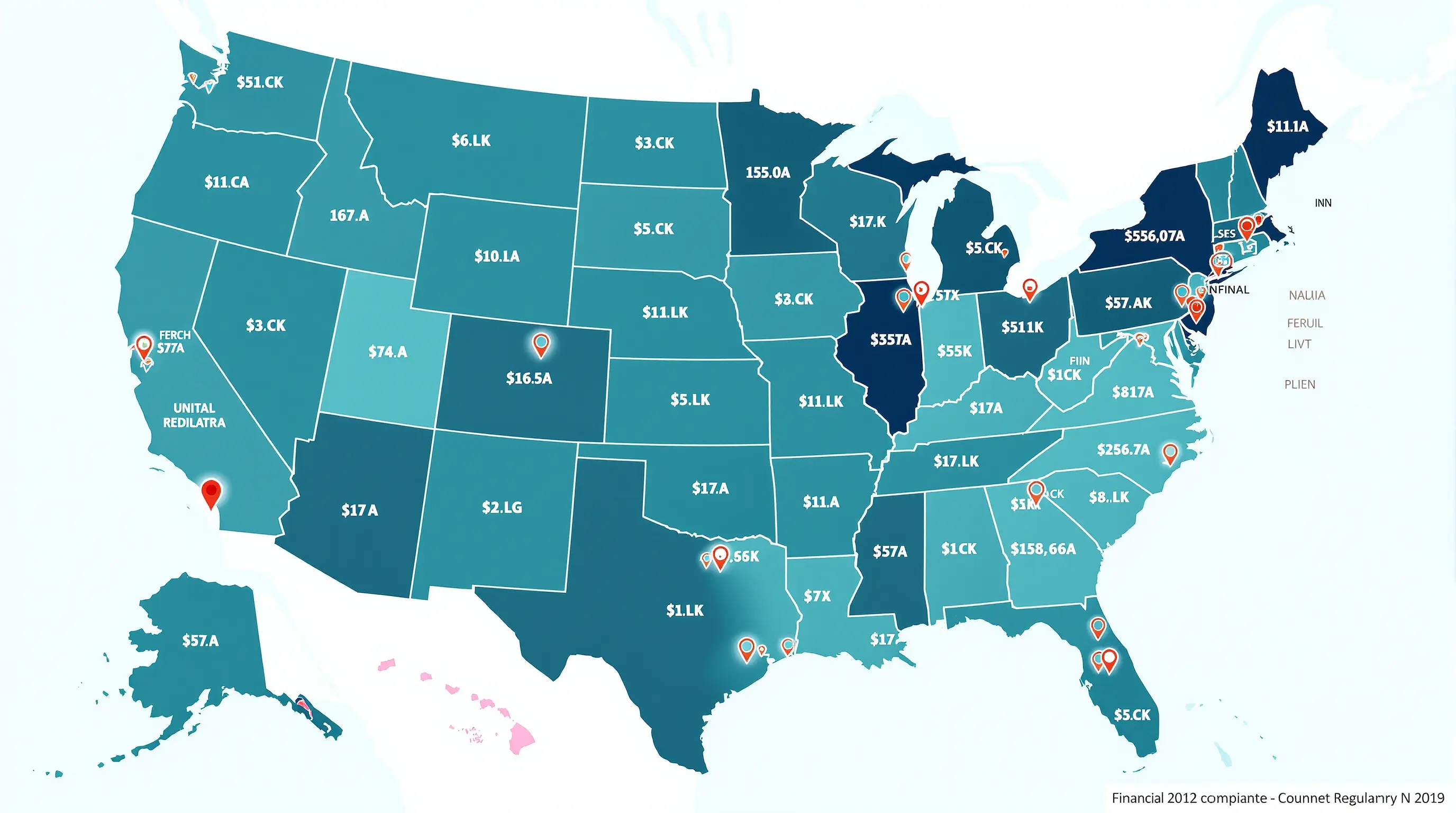
A FinCEN Geographic Targeting Order (GTO) is a time-limited order that requires certain businesses in a defined geographic area to collect and report specific information on certain transactions. Its exact scope comes from the order itself: which places are covered, which business types, which transaction types, which thresholds, and how long the duties last. There is no general GTO rule you can memorize, and a summary you read three years ago is not the authority. The current order text is. To see which orders are in force right now and which have expired, start with our live GTO map, which tracks active and historical Geographic Targeting Orders.
Each order sets its own geography, covered business types, transaction types, thresholds, duties, and effective period. The published order text is the authority.
Read the Order, Not the Summary
- Every GTO defines its own geography, covered businesses, transaction types, thresholds, and reporting duties.
- Nothing in this article states that a particular order covers a particular city, industry, or business today. Only the published order can do that.
- GTOs get extended, amended, and terminated. A status page tells you what is live; the order text tells you what it requires.
Historically, orders have reached several sectors, but past coverage is not a statement about what is covered today.
What a GTO Is, and What It Is Not
Three distinctions do most of the work here, and misunderstanding any of them is where compliance failures start.
A temporary, targeted order
A GTO is issued for a defined period and aimed at a defined slice of activity. It is a narrow instrument by design. That is also why it can change quickly: an order that was in force last quarter may have been extended, amended, or allowed to expire.
Not a permanent regulation
A GTO is not a standing rule that amends the Bank Secrecy Act, and it does not rewrite the general requirements you already operate under. It adds specific, temporary duties on top of them, and those duties end when the order says they end.
Not a substitute for your AML program
Being compliant with a GTO does not mean your BSA/AML program is adequate, and having a strong program does not automatically mean you are collecting what a GTO requires. One is a scoped overlay; the other is your ongoing framework of risk assessment, policies, training, monitoring, and independent testing.
Checking applicability is a sequence: confirm the order in force, match the geography, match the business type, match the transaction and threshold, then confirm the dates.
How a Geographic Targeting Order Generally Works
Order language varies, but most of them are built from the same parts. When you open the text, look for each of these in order.
- A defined geographic area. It might be described by state, county, city, or specific ZIP codes. Read the definition literally, including any boundary language, because a branch location is not the same thing as a covered geography.
- Covered business types. The order names who must comply. That list is the order's own list, not a general category, and some businesses outside the named types are not covered even if they handle similar transactions.
- Covered transaction types. The order describes the activity it reaches: the kind of transaction, the instrument involved, and whether the business must be a party to it or merely handle part of it.
- Thresholds and reporting duties. Some orders require collecting specific information at or above a dollar threshold; others require reporting on the transaction itself. The order states what to collect, what to file, where, and by when.
- An effective period. There is a start date and an end date, and either can be changed by a later notice. Treat both dates as something to verify rather than something to remember.
- Conditions, exemptions, and termination language. Many orders include limited exceptions or describe how they end. Read those before assuming a transaction is out of scope.
Implementation is operational: a written procedure, training for the staff who capture the information, retrievable records, correct reporting, and a scheduled re-check.
Why FinCEN Issues Them
A GTO is a way to address a specific, identified pattern of illicit activity in a specific place without imposing a nationwide obligation on every covered business. It lets FinCEN focus reporting where the risk has been observed, gather information that would otherwise not be captured, and stop when the need passes.
Two practical consequences follow. First, a GTO is usually a signal about a localized risk pattern, not a comment on your institution. Second, because the instrument is temporary and localized, the surrounding facts can shift faster than most compliance calendars update. That gap is where most of the operational problems live.
Stale assumptions and weak front-line awareness cause more GTO failures than misunderstanding the legal text.
Which Businesses Have Historically Been Covered
Described generally, and with no claim about what is covered today: Geographic Targeting Orders have been used across several sectors over the years, with title insurance and real estate transactions, money services businesses, and businesses handling certain payment instruments appearing in order texts at various points.
Treat that as context, not as a coverage list. An order issued this year may name different business types than one issued five years ago, and a business that has never been covered may fall inside a new order's language. The only reliable method is to read the current order and compare its defined business types against what your entity actually does.
How to Check Whether a GTO Applies to You Today
This is the question most people actually have, and it has a specific sequence. Work through it in order and write down what you found.
Step 1: Identify which orders are in force
Check the live GTO map for current status, then open the underlying order text on FinCEN's site to confirm. A map is a convenience layer; the published order is the source.
Step 2: Compare the covered geography against where the activity happens
Be precise about the unit the order uses. If it defines ZIP codes, match on those. If it defines a county or a city, match on that boundary. Where your business is headquartered is not the test; where the covered transaction occurs is.
Step 3: Compare the covered business types against your entity
Read the order's definitions rather than your own description of what you do. Businesses sometimes describe themselves loosely in marketing and precisely in an order, and the order wins.
Step 4: Compare the covered transaction types and thresholds
Confirm that the specific transaction in front of you meets the order's description, including any dollar threshold and any conditions about how funds are paid or received.
Step 5: Confirm the effective dates
Check whether the order is currently in effect, whether it has been extended, and whether a later notice changed its terms. Record the date you checked.
Step 6: Record the conclusion
Keep a short written note of the order consulted, the date, and why you concluded it does or does not apply. If your conclusion is later questioned, the note is the difference between an explanation and a guess.
If a GTO Applies: What a Covered Business Does Internally
The hardest part of a GTO is rarely understanding it. It is getting a temporary requirement into routine operations without dropping it when staff turn over.
Write the procedure down as an operating step
One page is enough: what triggers the requirement, who collects the information, which fields are required, where the record is stored, who reviews it, who files or reports, and by when. A order that lives only in an email is one resignation away from disappearing.
Train the people who actually touch the transaction
Compliance can read the order and still miss it, because the information has to be captured by a closer, a teller, an operations analyst, or a branch employee at the point of the transaction. Those roles need the specific instruction, in their language, with the actual form fields.
Keep records that survive a review
Store the required information in a place that is retrievable, not in an inbox or a scanned batch folder nobody indexes. Note who reviewed it and when. If the order names a retention expectation, follow it and document that you did.
Report what the order requires, on its timeline
Some orders require reporting to FinCEN, others require retaining and producing information on request. Confirm the mechanism the order names rather than assuming it matches a process you already run.
Re-check on a schedule
Put a review date on the calendar before the order's current expiration. Orders get extended quietly, and an expired order that is still being operated as if in force is a different problem from one that was never implemented.
Common Mistakes
These repeat often enough that they are worth naming directly.
- Assuming an old order still applies. Teams keep collecting information for an order that expired or was replaced, which is wasted effort and can be a data retention question.
- Assuming a new order does not apply. The opposite failure is more damaging: an order covers a geography or business type the team did not think applied to them, and nobody re-read the text.
- Treating a GTO as advisory. It is an order with defined duties and a deadline, not a recommendation. Missed filings do not correct themselves.
- Weak front-line awareness. Only two or three people know about the requirement, and the transaction is captured by someone who does not.
- Applying it at the headline level only. A team reads "our city" or "our industry" and implements it at one office or one product when the order's language is broader, or the reverse.
Where a GTO Fits in Your BSA/AML Program
A GTO is best understood as a temporary overlay on a program you already maintain. The program does the carrying: a risk assessment that reflects your actual customers and geographies, written policies and procedures, role-based training, monitoring, documented escalation, and independent review.
When an order lands, four program artifacts should change. Your risk assessment should reflect the new geographic or transactional exposure. Your procedures should contain the specific collection and reporting step. Your training should reach the roles that capture the information. Your monitoring or escalation log should record the decision trail. When the order ends, those artifacts should be updated again rather than left in place indefinitely.
The AML Red Flag Library is a practical companion here: 427+ verified AML red flags across 13 industries, searchable by FinCEN and FFIEC source, so the typologies behind an order are easy to brief against. Our Compliance Resources Hub collects the related checklists, guides, and tools in one place.
Where to Go Next
If you need to know what is in force right now, open the live GTO map. It is updated weekly and covers both active and historical Geographic Targeting Orders, so you can see status and then read the order text itself. For the surrounding program work, the Compliance Resources Hub has the checklists and guides, and the AML Red Flag Library helps you brief staff on the patterns that make an order necessary. Related analysis lives in our Insights library.
This article is general educational information about how Geographic Targeting Orders work. It is not legal advice, and it does not describe the scope of any specific order. Requirements are set by the published order text and can change. Confirm your obligations against FinCEN's current order and consult your own legal or compliance advisors about your circumstances.
Frequently Asked Questions
No. A GTO names the business types it covers, and that list is specific to each order rather than limited to banks. Some orders have reached non-bank sectors. Because the covered business types are defined in the order itself, the only reliable check is to compare the order's definitions against what your entity actually does, rather than assuming banks are the intended audience or that a non-bank business is automatically outside scope.

AML Compliance Checklist for Small Regulated Businesses
A practical walkthrough of the controls examiners expect, organized by the five BSA pillars.
What Is a Suspicious Activity Report (SAR)? The Complete Guide
How filing decisions are made and how that sits alongside order-based reporting duties.

What Is Customer Due Diligence (CDD)? The Plain-English Guide
The identification and ongoing monitoring framework that a temporary order builds on.
What Is an AML Program and Who Needs One in 2026?
The underlying program structure, so a scoped order has something to attach to.
Tags
AML/BSA Compliance Insights Team · Soflo Consulting
Soflo Consulting Team publishes BSA/AML compliance analysis for regulated businesses across the United States. The team covers regulatory enforcement actions, FinCEN guidance, risk assessment, and emerging compliance obligations for banks, money services businesses, mortgage lenders, fintechs, and other covered institutions.
6 sections
Key Takeaways
- 1A Geographic Targeting Order is a time-limited FinCEN order that requires certain businesses in a defined area to collect and report specific transaction information.
- 2Each order sets its own geography, covered business types, transaction types, thresholds, duties, and effective period. The published order text is the authority.
- 3Historically, orders have reached several sectors, but past coverage is not a statement about what is covered today.
- 4Checking applicability is a sequence: confirm the order in force, match the geography, match the business type, match the transaction and threshold, then confirm the dates.
- 5Implementation is operational: a written procedure, training for the staff who capture the information, retrievable records, correct reporting, and a scheduled re-check.
- 6Stale assumptions and weak front-line awareness cause more GTO failures than misunderstanding the legal text.
Need Expert Guidance?
Put these insights into action. Talk to a compliance professional at Soflo Consulting compliance specialist.
Stay Ahead of Compliance
Get FinCEN updates, BSA/AML guidance, and federal compliance news delivered to your inbox - no fluff.