Financial advisor compliance solutions span AML, risk assessments, and training, but requirements differ for RIAs, broker-dealers, and banks. Here is what to review.
Not all financial advisors have identical AML requirements, obligations depend on your specific business model and regulator
Financial advisor compliance solutions are not one-size-fits-all, because "financial advisor" is not a single regulatory category. A registered investment adviser (RIA), a broker-dealer, a bank, and an insurance agent answer to different regulators and carry different AML obligations. The key is to understand which obligations actually apply to your specific business model, and to avoid assuming that what one type of firm must do applies equally to you. This article explains the compliance landscape for financial advisors and investment advisers, with a focus on AML, risk assessment, and training, using cautious, factual language throughout.
RIAs, broker-dealers, banks, and other financial professionals are distinct regulatory categories with distinct obligations
Financial Advisor Compliance, Key Takeaways
- Not all financial advisors have identical AML requirements, obligations depend on the specific business model and regulator.
- Financial advisors can fall under different regimes: RIAs, broker-dealers, banks, and other financial professionals are distinct categories.
- Broker-dealers and banks have long-standing BSA/AML obligations; registered investment advisers have historically been subject to a different (and evolving) framework.
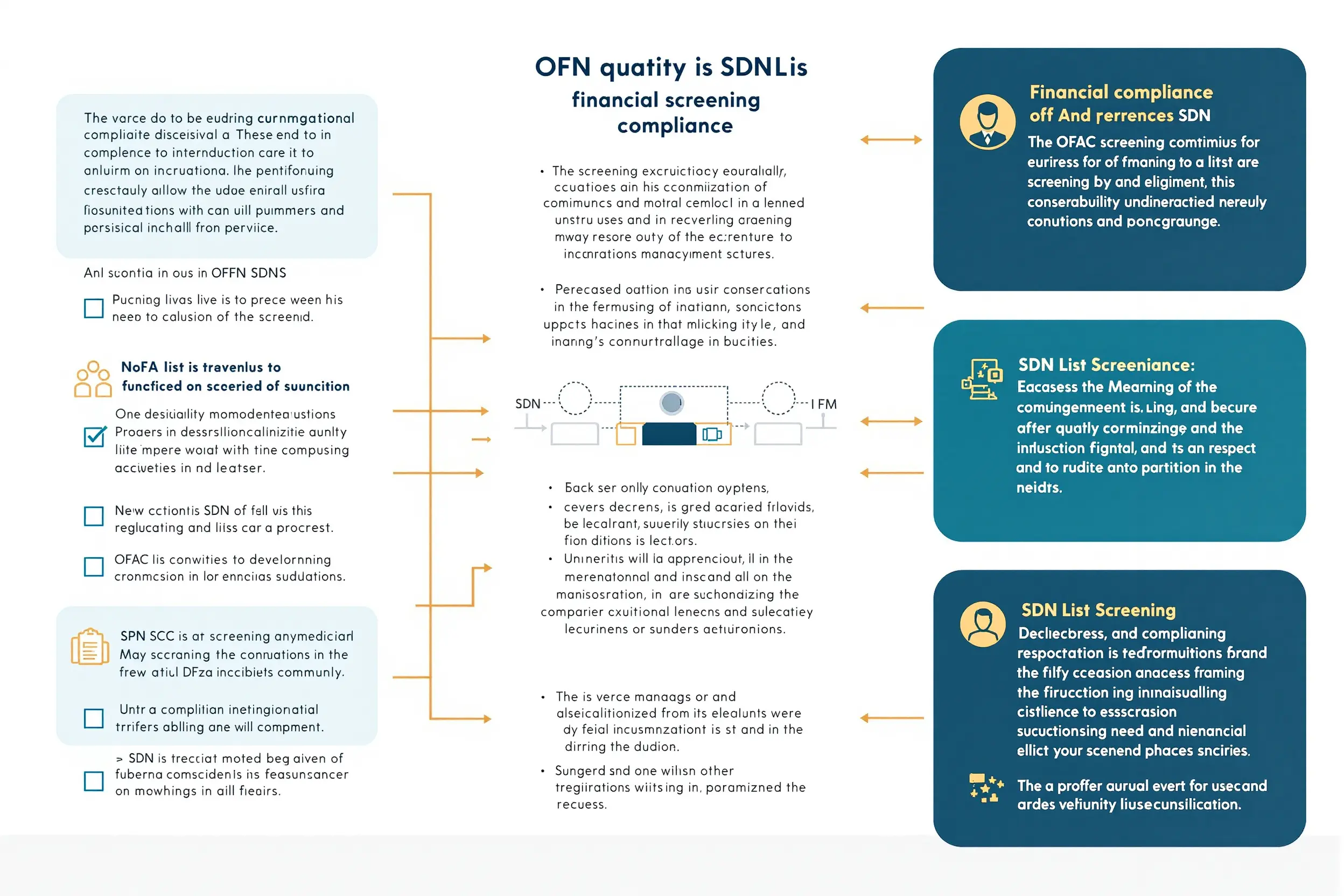
- OFAC sanctions screening applies broadly and is separate from securities/commodities and AML classification.
- A risk-based approach, grounded in a real risk assessment, is the foundation of any sound program.
- Requirements continue to evolve, so firms should monitor regulatory developments and review their programs regularly.
Broker-dealers and banks have long-standing BSA/AML obligations; the investment adviser AML framework is evolving
Financial Adviser Compliance Overview
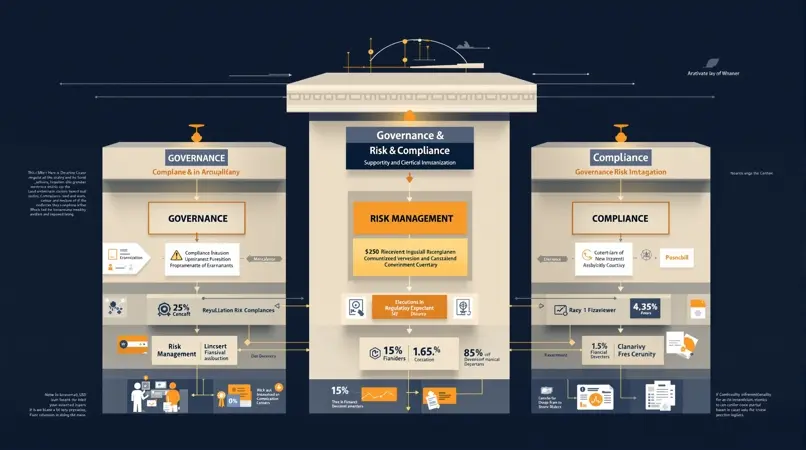
"Financial adviser compliance" is an umbrella that covers several distinct regulatory regimes. The term "financial adviser" is used loosely in the marketplace, but legally it can describe a registered investment adviser, a broker-dealer, a bank trust department, an insurance professional, or a hybrid of these. Each is subject to different rules. For AML purposes specifically, the dividing lines matter enormously: a broker-dealer and a bank have long been "financial institutions" under the Bank Secrecy Act (BSA) and FinCEN's rules, while registered investment advisers have historically been treated differently, a gap that regulators have been working to close. Understanding your precise classification is the first step in building the right financial services compliance program.
OFAC sanctions screening applies broadly and is separate from AML and securities/commodities classification
Who Regulates Financial Advisers?
There is no single regulator for "financial advisers." Registered investment advisers are generally regulated by the SEC (or state securities regulators for smaller advisers), under the Investment Advisers Act of 1940. Broker-dealers are regulated by the SEC and FINRA. Banks answer to federal banking regulators (the OCC, Federal Reserve, or FDIC) and, for BSA/AML matters, ultimately to FinCEN. FinCEN administers the Bank Secrecy Act across financial institutions, and OFAC administers U.S. sanctions that apply broadly to all U.S. persons. The point is that your compliance obligations flow from your actual regulatory classification, which is why identifying it correctly is the foundation of everything that follows.
A genuine, refreshed risk assessment is the foundation of any sound program
AML Considerations
AML for financial advisors is best understood by separating the categories. Broker-dealers and banks have long-standing BSA/AML obligations, including AML programs, customer identification, suspicious activity reporting, and more. Registered investment advisers have historically not been subject to a comprehensive, uniform AML program requirement under the BSA, but this is changing. In 2024, FinCEN finalized a rule to extend AML/CFT program requirements to certain registered investment advisers and exempt reporting advisers. The effective date of that rule has since been postponed, and the situation remains in flux. For current detail, see our coverage of the investment adviser AML program rule. The prudent takeaway: do not assume you have no AML obligations simply because you are "not a bank", and do not assume you have all of them either. Your specific status determines the requirements.
Documentation, training, and independent testing are what make a program real and defensible
Risk Assessment
Whatever your classification, the foundation of a sound program is a genuine AML risk assessment. A risk assessment identifies the specific money-laundering, terrorist-financing, and sanctions risks your firm faces, based on your clients, products, services, and geographies, and assesses both likelihood and impact. For a financial adviser, relevant factors might include the types of clients served, the investment products offered, the jurisdictions involved, and the complexity of the client relationships. The result tells you where to focus your resources. A risk assessment is not a one-time deliverable; it should be refreshed periodically and whenever your business or the regulatory environment changes materially.
Requirements continue to evolve, monitor developments and review your program regularly
Written Policies and Procedures
Policies and procedures turn your risk assessment into action. A written program documents your commitment, your risk appetite, and the controls you will maintain, and procedures specify exactly how each control is executed. For firms subject to BSA/AML requirements, a written AML program is a core expectation; for firms with evolving obligations, having well-documented policies is still sound practice and defensible in an examination. The discipline of a regular AML policy review keeps your documents aligned with both the law and your actual business. See our AML policy creation service for help building or refreshing yours.
Customer Due Diligence
Customer due diligence (CDD) is the process of knowing who your client is and understanding the risk they represent. For financial advisers, this can mean identity verification at onboarding, understanding the source of funds where relevant, and applying a risk-based approach to higher-risk relationships. The CDD rule establishes specific obligations for covered institutions, including beneficial ownership requirements where applicable. The depth of due diligence should scale with risk: a routine client may require standard verification, while a complex, high-risk relationship may warrant enhanced due diligence. The principle is proportionality, not treating every client the same, but calibrating diligence to the risk each client presents.
OFAC and Sanctions
Sanctions obligations are separate from AML classification and apply broadly. OFAC administers U.S. economic and trade sanctions, and the underlying requirement to avoid dealings with sanctioned persons applies to U.S. persons generally, not just financial institutions. For financial advisers, practical controls typically include screening clients and counterparties against the SDN list and other sanctions lists at onboarding and on an ongoing basis, handling potential matches through a documented escalation process, and retaining evidence of decisions. A firm can be otherwise compliant and still face serious sanctions exposure if its screening is weak. See our explainer on the intersection of OFAC and AML.
Suspicious Activity Escalation
Where a suspicious activity reporting obligation exists, for example, for broker-dealers and banks, and potentially for advisers as the rule landscape evolves, the key is a documented escalation process. Not every red flag requires a report; the obligation is to investigate, document, and, where the facts support it, escalate. A strong program defines who reviews alerts, how investigations are documented, and how escalation decisions are made and recorded. See our guide to what triggers a SAR filing for the framework. The emphasis should be on consistent, defensible judgment, not on treating every anomaly as suspicious, nor on ignoring genuine risk.
Employee Training
Training is the bridge between documentation and behavior. Effective AML training should be role-based, ongoing, and connected to the risks employees actually face, for a financial adviser, that means understanding the red flags relevant to client relationships, investment products, and account activity. Training is also a standard element of a sound BSA/AML program where one applies. Financial advisor compliance training should cover client identification, due diligence, sanctions, suspicious activity, escalation procedures, and emerging regulatory changes. It is not a one-and-done annual box to tick; it is a continuous investment in the human layer of your program.
Recordkeeping
Documentation is what makes a compliance program real, repeatable, and defensible. Risk assessments, policy approvals, training records, due diligence, escalation decisions, and any reporting should be documented and retained. Recordkeeping serves three purposes: it forces rigor (you must be able to write down what you did and why), it creates continuity (the program survives staff turnover), and it provides evidence (you can demonstrate to an examiner that your program is genuinely effective). A program that exists only in someone's head is not a program, and it will not survive scrutiny.
Independent Review / Testing
A control that is never tested is a control you cannot prove works. Independent testing verifies that policies are followed, controls operate as designed, and the program is actually effective rather than merely documented. For firms with a BSA/AML obligation, independent testing is a standard program element; for others, periodic review is still prudent. This is work a person with independence and expertise performs, a tool can flag exceptions, but it cannot judge whether the program itself is sound. See also our guide to what a real AML program review should include.
Regulatory Updates
The regulatory landscape for financial advisers is actively changing, particularly around investment adviser AML obligations. Firms should build a process for monitoring regulatory developments, whether that means tracking FinCEN, SEC, and OFAC guidance directly or relying on a qualified professional to flag relevant changes. A compliance program is a living thing, and a program built on outdated assumptions can create a false sense of security. For the latest on the investment adviser rule, see our article on the RIA AML program rule and our investment adviser compliance overview.
Common Compliance Gaps
Across financial advisers, a handful of gaps recur. Assuming your AML obligations are identical to another type of firm's; treating the risk assessment as a one-time exercise; letting policies drift out of alignment with the business; treating training as an annual checkbox; failing to document decisions; and neglecting OFAC screening because it "isn't AML." Perhaps the most damaging is the classification mistake, building a program around the wrong regulator's expectations. The table below maps each compliance area to what firms should review and the common gap:
| Compliance Area | What Firms Should Review | Common Gap |
|---|---|---|
| Regulatory classification | Whether you are an RIA, broker-dealer, bank, or other | Assuming obligations of another category |
| AML program | Whether a BSA/AML program requirement applies | Assuming no obligation or assuming all apply |
| Risk assessment | Money-laundering and sanctions risk exposure | One-time, never refreshed |
| Policies | Alignment with law and actual business | Generic template that does not fit |
| Customer due diligence | Identity, source of funds, beneficial ownership | Uniform diligence, not risk-based |
| OFAC screening | SDN and sanctions list screening | Treated as optional or "not AML" |
| Escalation | Investigation and reporting procedures | No documented decision process |
| Training | Role-based, ongoing, relevant content | Annual generic checkbox |
| Recordkeeping | Retention of decisions and evidence | Program lives in someone's head |
| Independent review | Testing that controls actually work | Skipped or performed without independence |
Preparing for Examinations
Whether you face an SEC exam, a FINRA exam, a bank examination, or a state regulator review, the fundamentals are the same: know your classification, document your risk assessment, keep policies aligned with your business, maintain training and recordkeeping, and be able to show, not just claim, that your controls work. Examiners consistently look past glossy binders to the substance underneath: is the risk assessment genuine, are the policies followed, and are decisions documented? The firms that fare best are those that have done the thinking in advance, not those that scramble at the last minute. A periodic compliance monitoring review helps keep the program exam-ready between cycles.
How Soflo Consulting Can Help
Soflo Consulting helps financial advisers and investment advisers build and maintain the compliance layer that supports their business. We can conduct or refresh an AML risk assessment, review your policies and procedures, train your team, advise on OFAC and sanctions obligations, and independently test your program. Because requirements differ by business model, we start by understanding your specific classification and exposure, then help you build the right controls for it. See our investment firm AML compliance page for more.
Need help reviewing your financial services compliance program? Contact Soflo Consulting to discuss your specific situation and identify where your program could be stronger.
Disclaimer: This article is provided for general educational and informational purposes only and is not legal, financial, or regulatory advice. It does not create an attorney-client or consultant-client relationship. Regulatory requirements vary by business model and jurisdiction, and laws and guidance change frequently. Consult qualified legal and compliance professionals regarding your specific circumstances.
Frequently Asked Questions
No. "Financial advisor" is not a single regulatory category. A registered investment adviser, a broker-dealer, a bank, and an insurance professional answer to different regulators and carry different AML obligations. Broker-dealers and banks have long-standing BSA/AML obligations, while registered investment advisers have historically been subject to a different, and evolving, framework. Your specific classification determines which requirements apply to you.

Investment Adviser AML Readiness: Preparing for FinCEN's 2028 Rule
FinCEN's rule extending AML program requirements to investment advisers was finalized in 2024 with an effective date postponed to January 1, 2028.

AML Compliance for Investment Advisers (2024)
A foundational overview of AML considerations for investment advisers.

Compliance Monitoring: What Financial Institutions Should Monitor
The operational layer, detecting, reviewing, and escalating unusual activity.
OFAC Sanctions Compliance and AML: Understanding the Intersection
How sanctions obligations sit within, and remain distinct from, your AML framework.
FinCEN, Financial Crimes Enforcement Network
Primary source for BSA/AML rules, including the investment adviser AML program rulemaking.
SEC, Securities and Exchange Commission
Primary source for investment adviser and broker-dealer registration and regulation.
FINRA, Financial Industry Regulatory Authority
Primary source for broker-dealer rules and examination priorities.
OFAC, Office of Foreign Assets Control
Primary source for U.S. sanctions programs and screening requirements.
Tags
AML/BSA Compliance Insights Team · Soflo Consulting
Soflo Consulting Team publishes BSA/AML compliance analysis for regulated businesses across the United States. The team covers regulatory enforcement actions, FinCEN guidance, risk assessment, and emerging compliance obligations for banks, money services businesses, mortgage lenders, fintechs, and other covered institutions.
7 sections
Key Takeaways
- 1Not all financial advisors have identical AML requirements, obligations depend on your specific business model and regulator
- 2RIAs, broker-dealers, banks, and other financial professionals are distinct regulatory categories with distinct obligations
- 3Broker-dealers and banks have long-standing BSA/AML obligations; the investment adviser AML framework is evolving
- 4OFAC sanctions screening applies broadly and is separate from AML and securities/commodities classification
- 5A genuine, refreshed risk assessment is the foundation of any sound program
- 6Documentation, training, and independent testing are what make a program real and defensible
- 7Requirements continue to evolve, monitor developments and review your program regularly
Need Expert Guidance?
Put these insights into action. Talk to a compliance professional at Soflo Consulting compliance specialist.
Stay Ahead of Compliance
Get FinCEN updates, BSA/AML guidance, and federal compliance news delivered to your inbox - no fluff.